Fabric selection

Maharam — Start with the material in the room

Contract upholstery and coated surfaces ask for a hand, a construction, and a usable width before a colour story can be trusted.

Share the seating brief
First step
Name a swatch, a wool check, a vinyl reference, or the chair and wall the textile will cover.
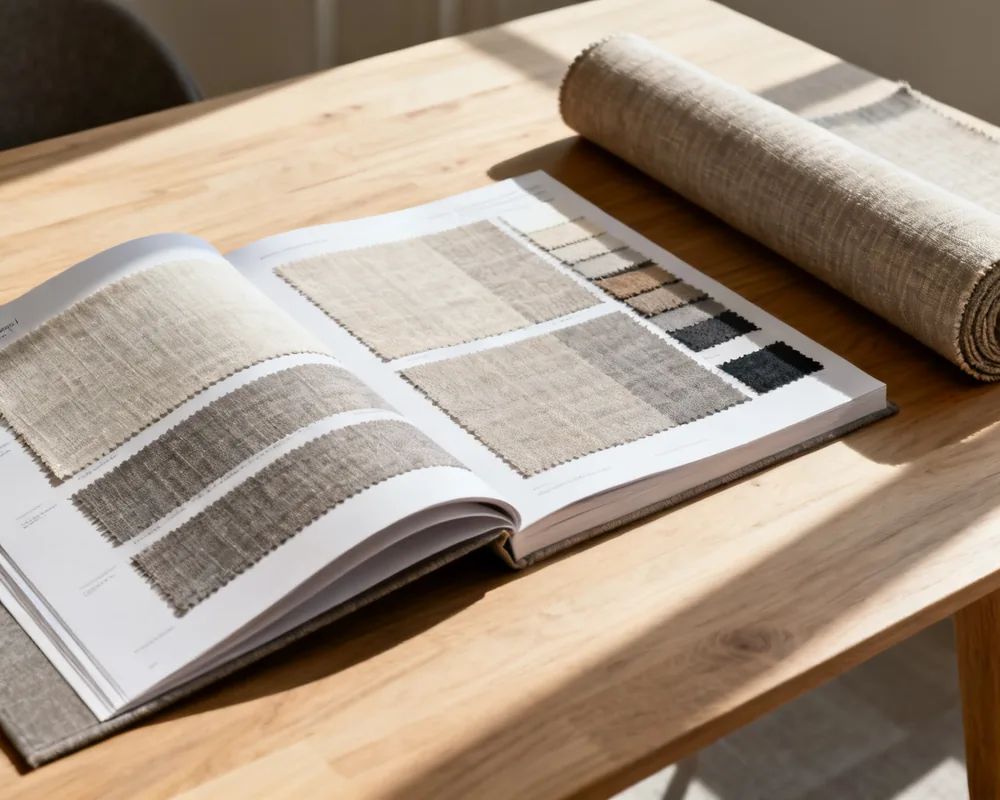
Large textile swatch book open beside one unbranded upholstery roll
Compare touch, structure, and colour against a physical sample.

Liquid cleaning and room humidity are separate questions

Liquid water on the face

A spill on a lounge seat is a liquid event. Ask how resistance was checked, at what pressure, and whether the specimen was the coated face, the woven cloth, or a finished seam.

Context
Cleaning chemistry, dwell time, and whether the construction is woven upholstery or a coated surface.
Vapour in the occupied room

Humidity moving through a textile is a different property from a wiped spill. Ask for the vapour method and the conditioning of the specimen before comparing two Maharam textiles.

Context
Method name, temperature gradient, and whether a backing or coating was present on the tested piece.

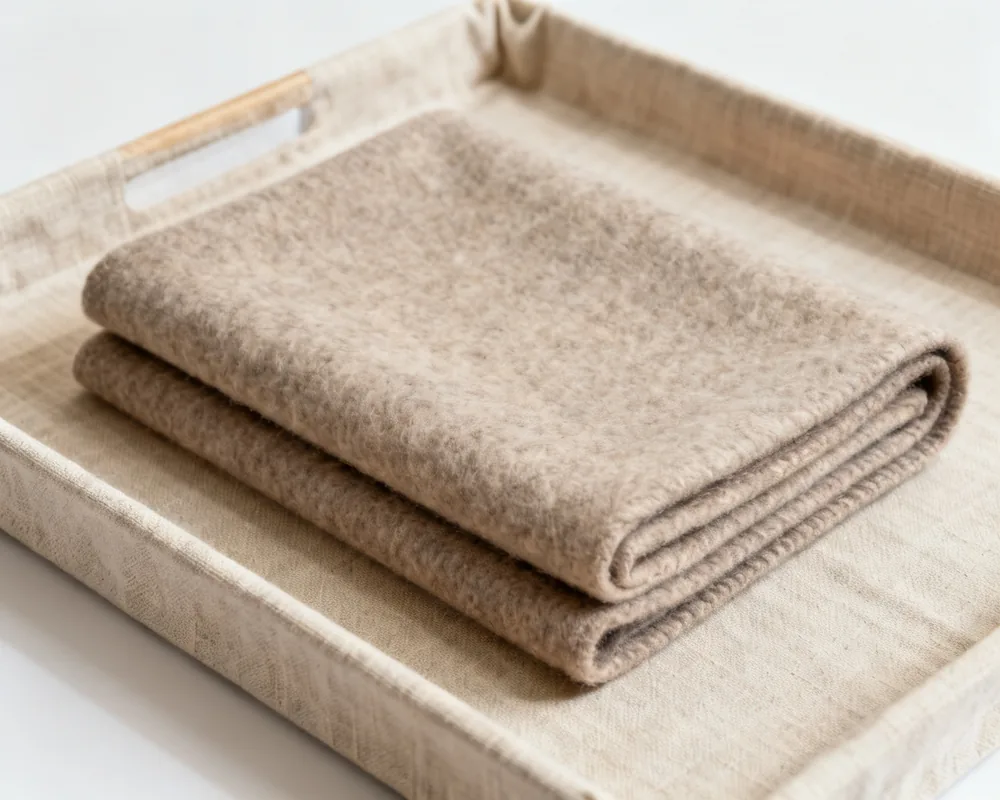
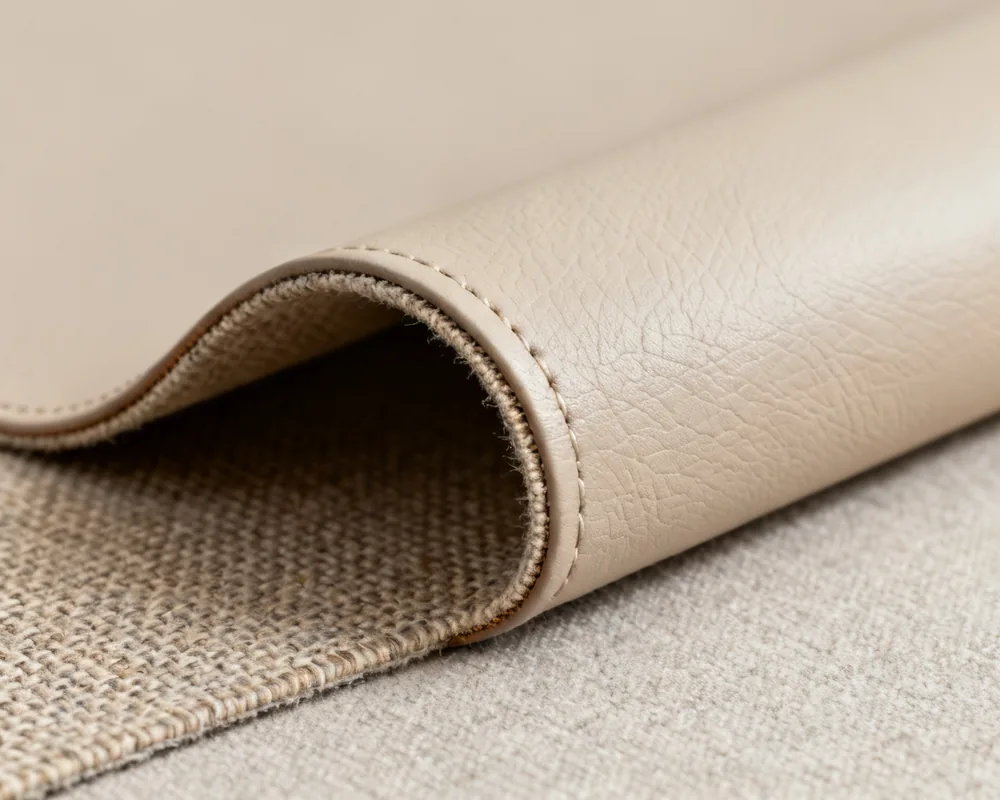
Wool and a synthetic or coated face answer different briefs. A wool-rich cloth is discussed for touch and how it takes moisture from the air in an occupied room. A coated or synthetic face is discussed for wet wiping and a surface that can dry after a spill. Neither argument is an environmental ranking, and neither replaces a specimen sheet. A seating worksheet can list target figures without calling them measured results: 320 g/m², 140 cm of usable width, and a fibre declaration in percent by mass that sums to 100. The reply then asks which figures came from a sheet and which are still wishes. Abrasion, pilling, seam slippage, and tear stay off that line until a method and a specimen condition are named.

Material scope

Match the application

  1. Identify the setting

    Contract seating, a wrapped panel, or a hospitality banquette changes which face you should handle first. Indoor occupied rooms are the starting context for this scope.

  2. Describe the stress

    Separate daily sitting, cleaning liquids, shade matching under the project lamps, and abrasion. A wool check and a vinyl face do not share one wear story.

  3. Match the evidence

    Ask for the method and the specimen state that fit that stress. A sample enquiry records the question. It does not by itself confirm that a cutting is in stock.

Sampling approval gates

Information handoff, not a delivery guarantee
Gate Buyer reference Discussion output
Brief Fibre blend or coating type, plus the chair, panel, or banquette A single sample question, written beside the reference name
Shade Lab dip, wool check colourway, or vinyl colour target A physical review standard kept with the approved cutting
Bulk context Quantity and the delivery destination you are planning An order-specific confirmation, separate from the swatch note

Fabric selection questions

Why is GSM not enough for a seating cloth?

Mass per unit area does not describe weave, yarn, pile, or a coating. Two Maharam upholstery references can share a nominal weight and still differ in hand, seam behaviour, and how a check repeats across a cushion.

How should I describe a sample?

Send the reference name, whether it is woven upholstery or a coated face, the usable width you need to cut, and the room. Add the shade band or finish you are trying to hold, and say if a previous cutting is the standard.

Can test results be compared directly?

Only after the method, specimen condition, and report scope match. Abrasion, pilling, tear, and colourfastness are separate notes. Liquid resistance is not moisture-vapour transmission, and neither number travels from a wool cloth to a vinyl face.

Define the development question

Describe the construction you have and the change you want to judge: a quieter hand, a tighter check, or a coated face that still wraps a tight radius.

What should feel different on the next cutting, and which sample will be the standard?
Discuss your fabric requirements